
THE DRAFT HAS STARTED"I Want You for the U.S. Army", "This We'll Defend", The Motherland Calls!:Why Automatic Selective Service Registration Has Hip-Hop on High Alert
As of this December, the U.S. government is quietly flipping the switch on automatic Selective Service registration, effectively tethering every eligible 18-year-old male to the military apparatus. Fo

As of this December, the U.S. government is quietly flipping the switch on automatic Selective Service registration, effectively tethering every eligible 18-year-old male to the military apparatus. For a generation raised on the post-9/11 fallout and systemic distrust, this isn’t just bureaucratic housekeeping—it’s a move that brings the looming reality of a national draft back to the center of the cultural conversation. When the National Defense Authorization Act (NDAA) was signed into law, the headlines focused on budget lines and troop pay, but the fine print signaled a massive shift in how the state monitors its youth. Starting in December, if you are a male between the ages of 18 and 26, the Selective Service System will automatically register you using data from other federal agencies. No more waiting for a postcard in the mail; the government is now opting you into the possibility of war by default. For the hip-hop community, this development hits different. Historically, the draft has been a flashpoint for social unrest, from the anti-war protests of the Vietnam era to the raw critiques found in the golden age of conscious rap. Rappers have long been the frontline reporters on the socioeconomic disparities of military service—the "poverty draft" that incentivizes young Black and Brown men to enlist not out of patriotism, but out of a lack of options. Now, the state is removing the barrier of voluntary participation entirely, streamlining the process of mobilization. "They want us on the grid before we even know how to navigate the system," says J-Status, a community organizer and cultural commentator. "We’ve seen how these data sets are used to track and police our neighborhoods. Now they’re using those same digital footprints to prepare us for the front lines. It’s a systemic overreach that needs to be scrutinized." The government frames this as "modernization"—a way to streamline an outdated, paper-based system. But for activists and hip-hop heads, this looks like a strategic maneuver to ensure that if a major geopolitical conflict erupts, the administration has an immediate, massive database of "human capital" ready to go. The lack of public discourse surrounding this change is exactly what has people on edge; it’s a quiet expansion of state power disguised as administrative efficiency. As we move toward the December implementation date, the silence from the mainstream media is deafening, but the streets are beginning to stir. The conversation is shifting from individual agency to collective accountability. If the state is going to automatically register the youth for the machinery of war, the youth are beginning to ask: what are you going to do to ensure that these lives aren't treated as disposable assets? In an era where the divide between the state and the community feels wider than ever, this automatic registration is being viewed not just as a policy change, but as a provocation. The culture has always been the vanguard of dissent, and as the clock ticks toward December, expect the narrative to center on one core question: Who are you really drafting, and for what?
Related Articles
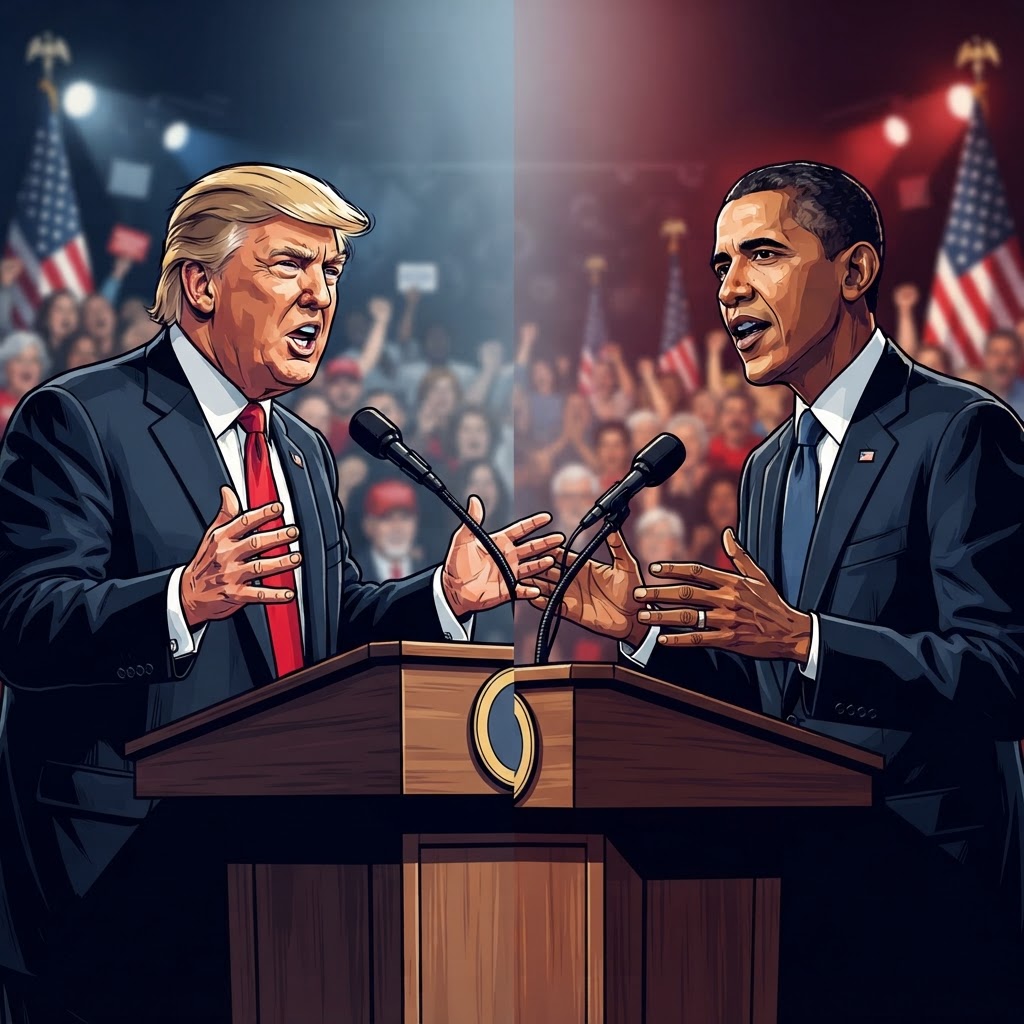
Trump, Obama face off on campaign trail as battle for control of Congress intensifies
a day ago
**The Sky Is Falling, But the Iron Dome Held: Analyzing the Intercepts Over U.S. Bases**
2 months ago
**The Mustangs’ Last Stand: Why Trump’s Return Could Mean the Slaughter of an American Icon**
2 months ago
Sponsored
Put Your Brand in the Conversation
Reach a politically engaged, culturally aware audience with a premium campaign.
Discuss this ad
(0)No comments yet. Start the conversation.
Community Comments
(0)No comments yet. Start the conversation.