
Code Red: Viral Footage Shows Police Harassing Black Teen Over a Jacket in Latest Case of "Walking While Black"
A harrowing encounter between law enforcement and a Black youth has ignited a firestorm online, reigniting critical conversations about racial profiling, the criminalization of youth, and the weaponiz
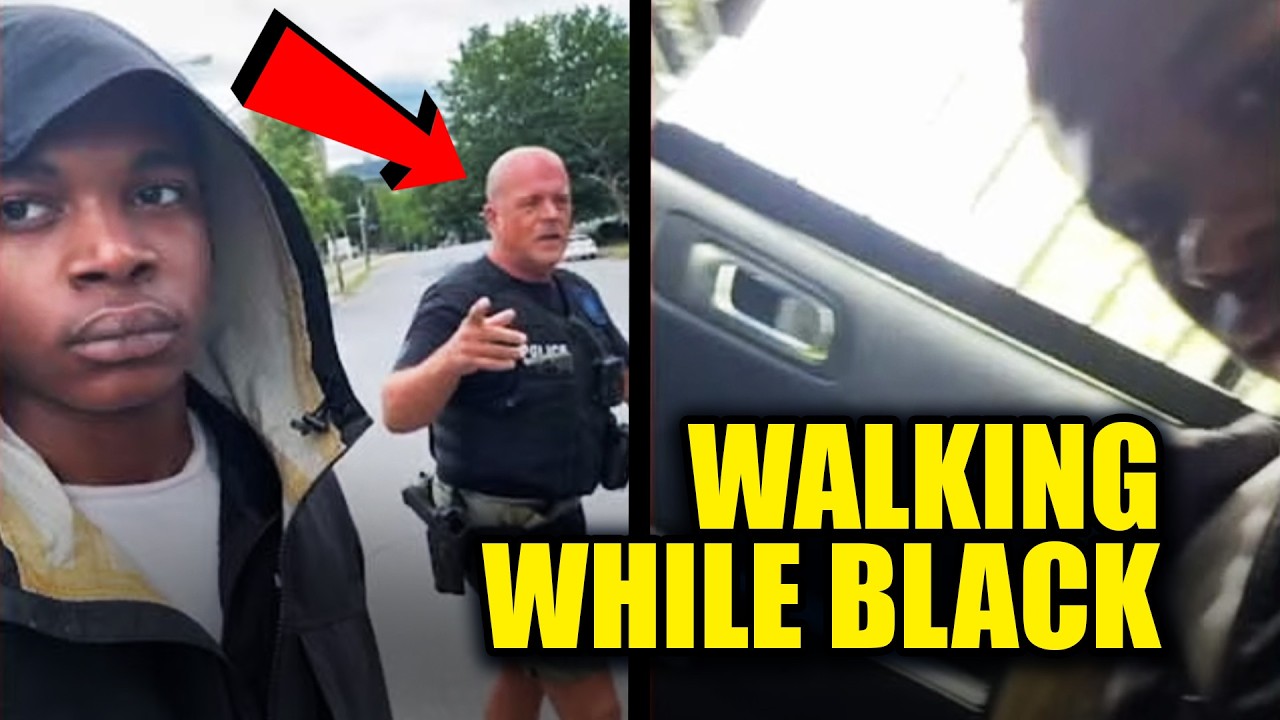
A harrowing encounter between law enforcement and a Black youth has ignited a firestorm online, reigniting critical conversations about racial profiling, the criminalization of youth, and the weaponization of the "suspicious person" narrative. The video, which began circulating across social media platforms late Tuesday, shows a tense confrontation between a Black teenager and an unidentified police officer. The teen, who appears to be simply standing outside, is subjected to a barrage of questioning that quickly escalates from a "wellness check" into a full-scale detainment. The core of the officer’s grievance? The teen was wearing a jacket—a piece of clothing the officer deemed "suspicious" for the conditions. "You’re wearing a jacket in this weather, that tells me something is wrong," the officer can be heard saying in the clip, a justification that civil rights advocates are already labeling as a flimsy pretext for racial profiling. Despite the teen’s calm demeanor and attempts to explain his presence, the interaction rapidly devolves into the officer moving to detain him, citing vague concerns about "public safety." For the hip-hop community, this footage isn't an anomaly; it is a recurring verse in a song we’ve heard far too many times. From the golden era to the present day, artists have consistently documented the hyper-policing of Black bodies in public spaces. This incident strikes a particularly raw nerve, echoing the familiar trauma of young men being stopped for simply existing. The irony isn't lost on the streets: we are currently in an era where fashion is a cornerstone of hip-hop culture, yet for many Black youth, what they wear—or don’t wear—is constantly being scrutinized by those sworn to "protect and serve." "It’s not about the jacket. It’s never been about the jacket," says community organizer and cultural critic Marcus "Mase" Thompson. "It’s about control. It’s about the fact that they see a young Black man existing in a space and their immediate instinct is to interrogate his humanity until they can find a reason to put him in cuffs. This is the definition of 'walking while Black' in 2024." The footage captures the exact moment the power dynamic shifts from a conversation to a violation, as the teen is pushed against a wall, his confusion morphing into the resigned frustration of someone who knows the system is not built for his protection. As the clip ends, the sound of sirens grows louder, punctuating the helplessness of a situation that has played out in neighborhoods across the country for decades. Legal experts have already begun weighing in, noting that the "suspicious person" doctrine is frequently abused by law enforcement to bypass Fourth Amendment protections. However, in the court of public opinion, the verdict is already in. The video has been shared by high-profile activists and artists, sparking a call for accountability and a review of the department's policies regarding stops and frisks. As this story develops, Hip Hop Politics remains committed to monitoring the fallout. We’ve seen the power of the lens before—it is the only tool that has consistently held the system accountable when the badge tries to hide the truth. For the teen involved, the trauma will linger long after the video stops looping, but for the rest of us, the message is clear: the surveillance of our youth is a political act, and the resistance to it must be just as loud. We will continue to update this story as the identity of the officer and the department involved are confirmed.
Related Articles

Sponsored
Put Your Brand in the Conversation
Reach a politically engaged, culturally aware audience with a premium campaign.
Discuss this ad
(0)No comments yet. Start the conversation.
Community Comments
(0)No comments yet. Start the conversation.